
Enterprise AI · GovTech · Web
AI-Powered Challenge Review
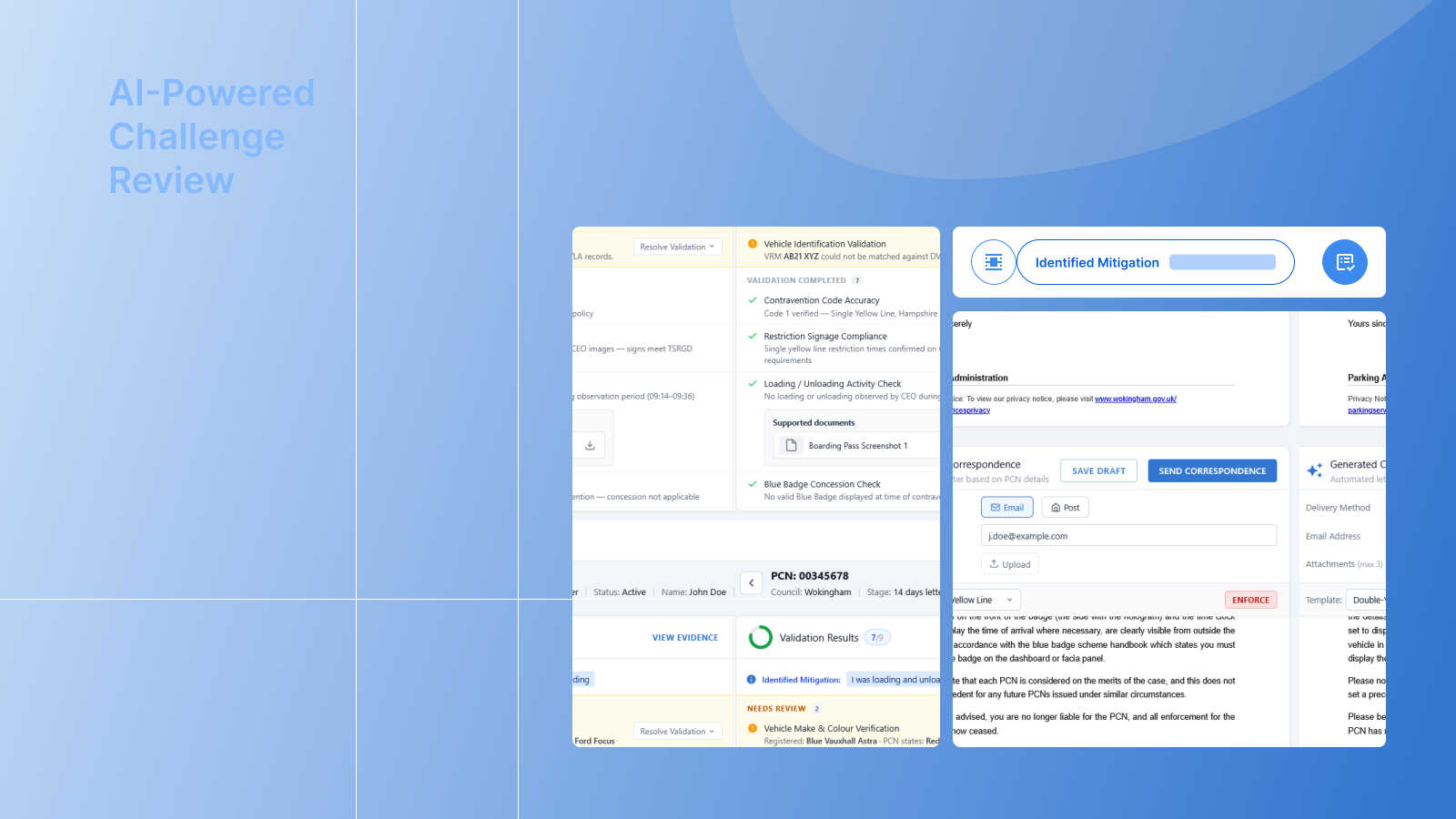
A portfolio prototype for helping parking officers review challenge evidence, resolve mitigation exceptions, and prepare correspondence while retaining final responsibility.
RoleProduct design and UX workflow
Duration4 weeks
PlatformWeb
StatusInteractive prototype
Key decision
Keep evidence, AI interpretation, and officer verification distinct.
The trade-off
An explicit review step adds effort but keeps responsibility visible before a letter is issued.
Current outcome
An interactive prototype covering evidence review, mitigation exceptions, and correspondence.
Project summary
Support faster review without turning a suggestion into a decision.
The prototype brings case details, photographic evidence, challenge summaries, mitigation handling, correspondence, and final review into one flow. Its central UX requirement is clear accountability: generated summaries and proposed decisions assist the officer, but the officer verifies evidence, corrects the reason, reviews the letter, and issues the decision.
Primary user
A parking challenge officer reviewing a case and preparing a response inside an operational notice-processing workflow.
Constraint
AI output may be incomplete or wrong. The interface must expose source evidence and provide correction paths rather than imply autonomous approval.
Complete task
From case evidence to a reviewed letter.
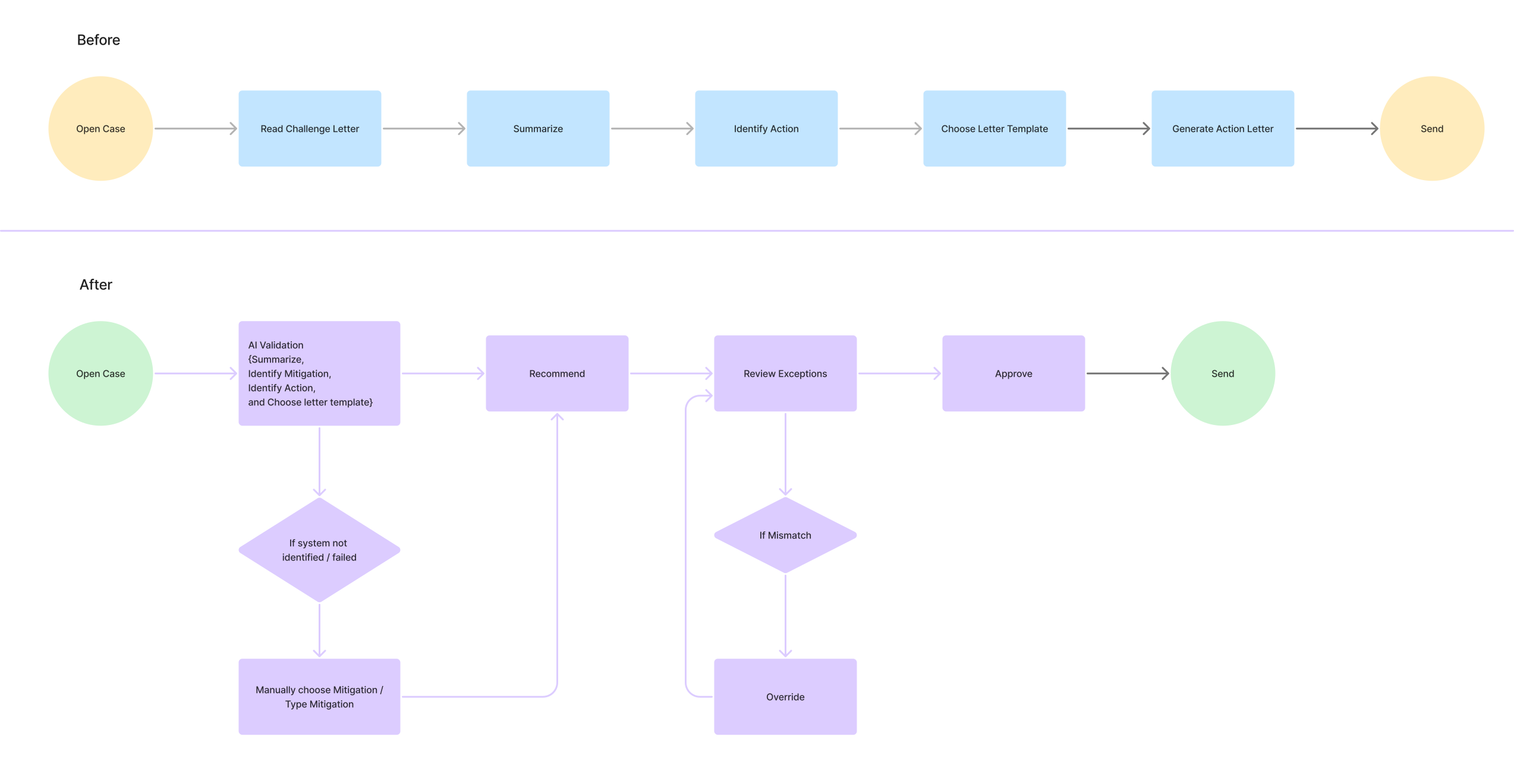
Review the case
The officer sees case metadata, the challenge reason, observation notes, and supporting evidence in context.
Check the suggestion
An AI-assisted summary organizes the appellant’s reason, assessment, and unexpected circumstances. It is supporting material, not a final decision.
Resolve mitigation
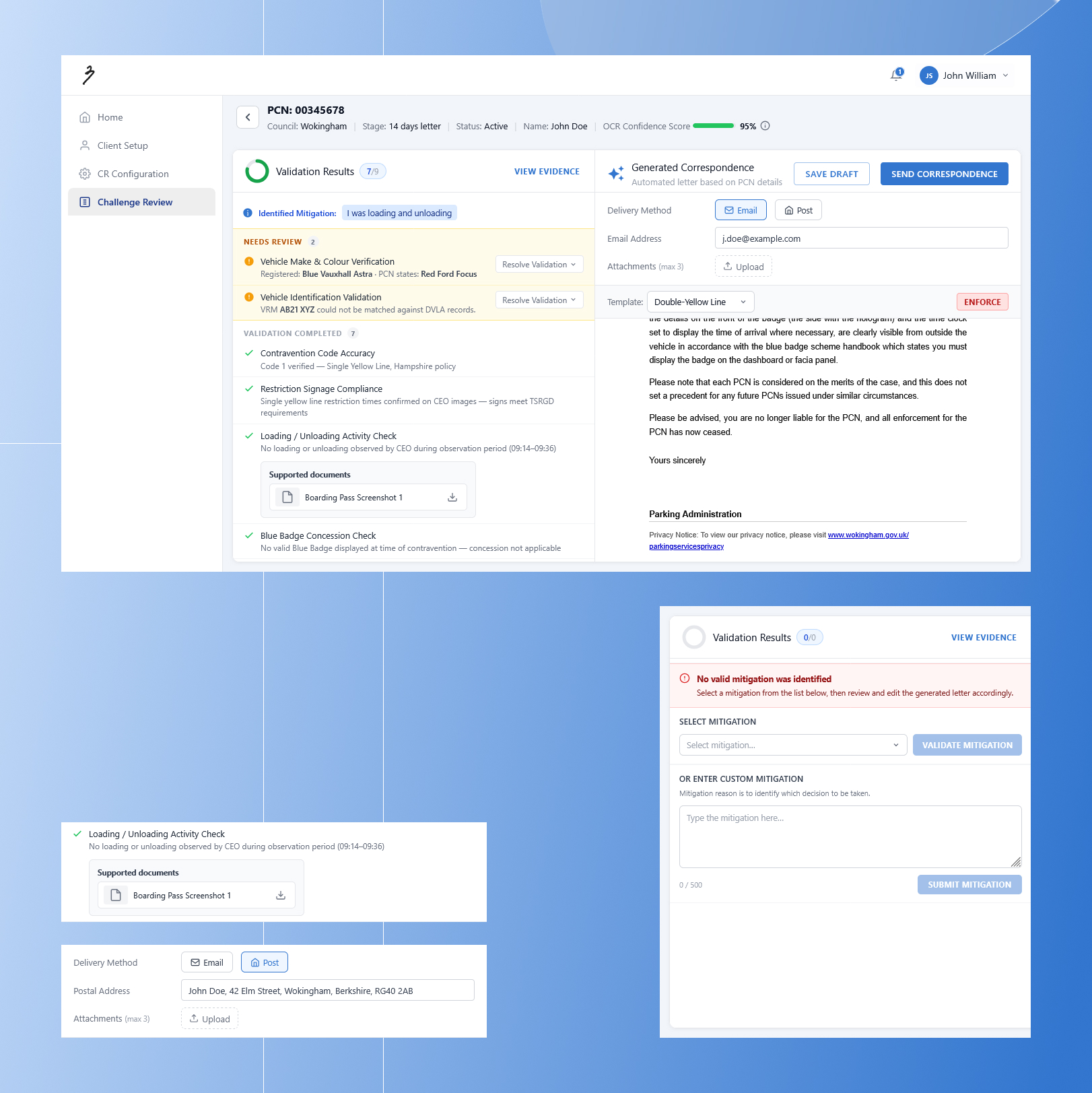
If no valid mitigation is identified, the officer selects a documented reason or enters a custom one before validation can continue.
Verify and override
Evidence confirmation and override controls keep the officer responsible for correcting the proposed path.
Prepare correspondence
The selected decision informs an editable letter that is reviewed before issue.
Review and issue
A final checklist keeps verification separate from generation and preserves the decision trail.
Key decisions
Make the source, exception, and human action visible.
Place evidence beside interpretation
Officers can open supporting images and read observation notes before confirming whether the evidence supports the contravention.
Design the missing-mitigation state
A critical exception needs its own path: when no valid mitigation is identified, the user must select or enter a reason and validate it before moving on.
Keep correspondence editable and reviewable
The generated letter remains a draft. Editable content and a separate review stage prevent generation from being mistaken for authorization.
What the prototype demonstrates
- Case and evidence review in one workspace
- AI-assisted summary clearly separated from officer verification
- Mitigation selection, custom reason, and override paths
- Editable letter preparation and final review
Outcome & next steps
The reference is an interactive portfolio prototype. It does not establish deployment, operational adoption, model accuracy, confidence thresholds, compliance, or measured time savings. The next step is to evaluate decision quality and task completion with representative officers.
Next: Digital Worker AI
View case study