
Self-initiated concept · Enterprise UX
Grid Intelligence
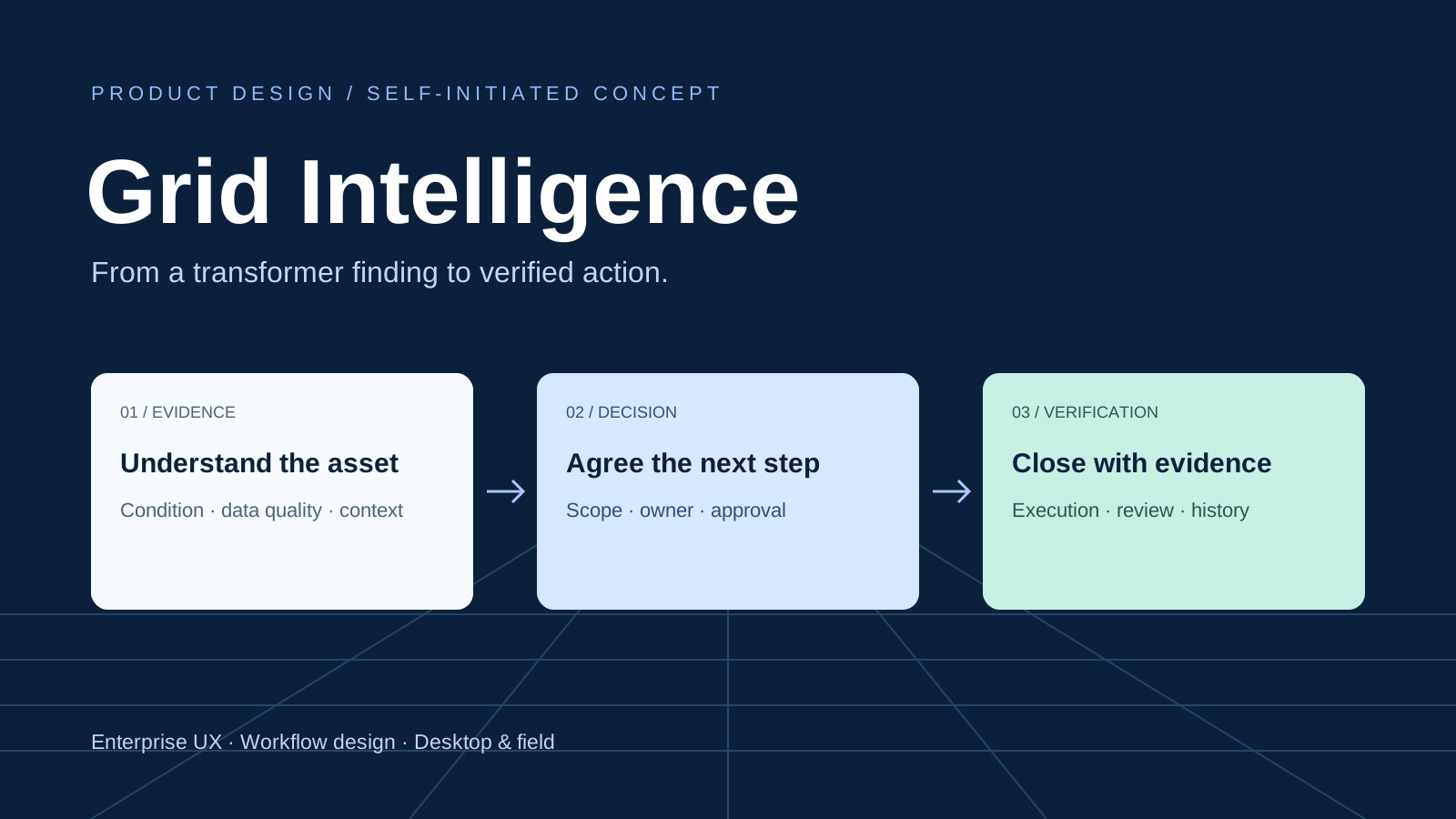
A product concept exploring how transformer condition evidence can move into accountable maintenance action, field execution, and verified closure.
RoleSelf-initiated product concept
ScopeEnd-to-end workflow
PlatformDesktop and field
StatusPrototype · Not launched
Key decision
Separate engineer submission from independently verified closure.
The trade-off
A review handover adds coordination but creates an explicit opportunity to check completion evidence.
Current outcome
A self-initiated design and linked prototype; domain and usability validation remain open.
Working hypothesis
A handover should preserve the reasoning.
Maintenance decisions may become harder to follow when asset evidence, work assignments, approvals, and completion records are handled separately. The concept asks how one connected record could keep the evidence, decision, owner, and next step visible across office and field teams.
This is a design hypothesis, not a finding from completed utility-user interviews.
Proposed roles
- Asset manager
- Maintenance planner
- Authorized approver
- Field engineer
- Completion verifier
Permission principle
The same person may hold several roles, but where independent review is required the interface should explain why another authorized reviewer must complete it.
Maintenance journey
One record from finding to closure.
Find
An asset manager reviews transformer condition evidence and identifies a maintenance need.
Assess
The finding becomes an assessment with evidence, reasoning, and a proposed next step.
Plan
A maintenance planner defines scope, ownership, engineers, and schedule.
Approve
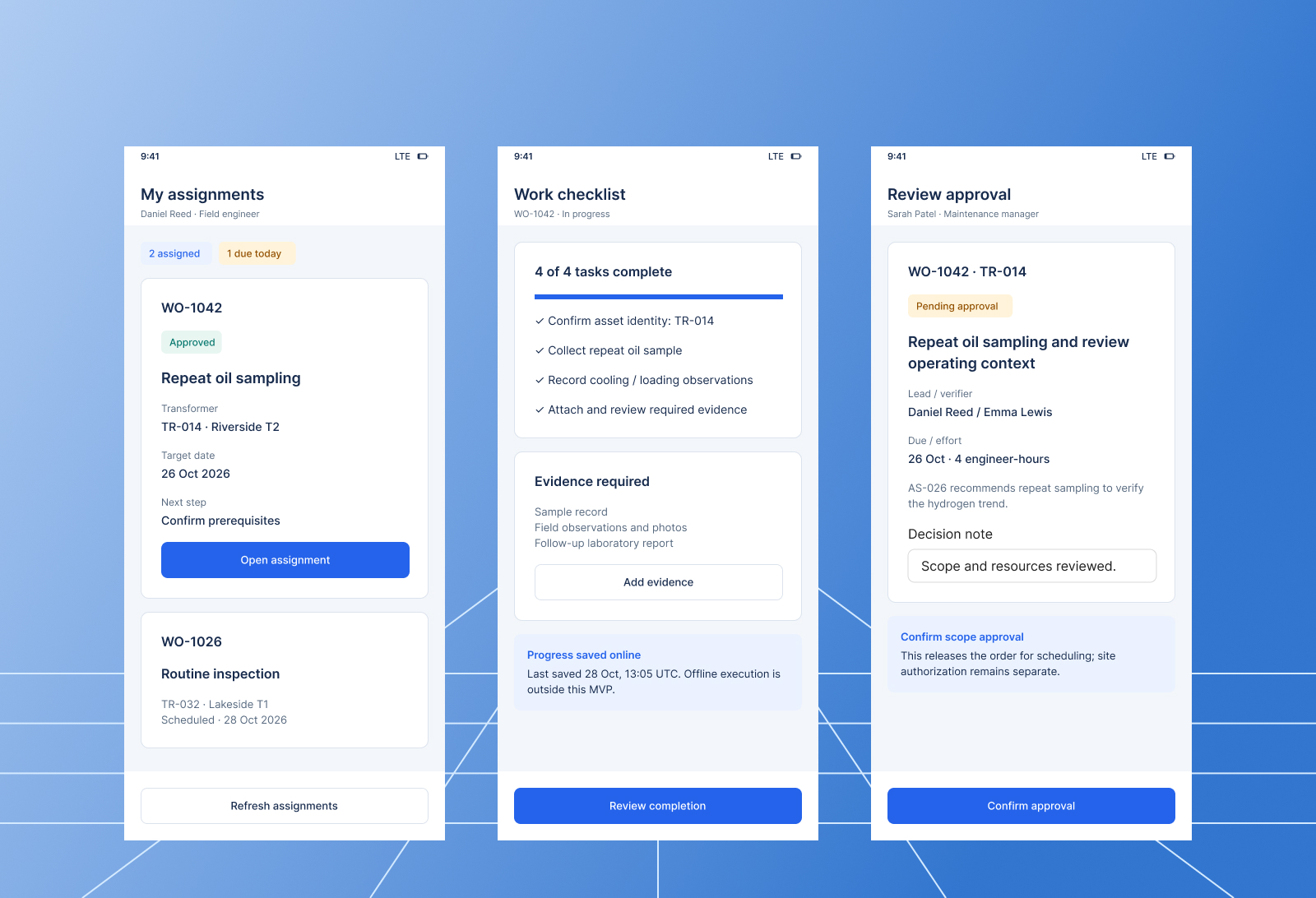
An authorized reviewer approves, requests changes, or rejects with a recorded reason.
Execute
A field engineer records progress, checklist results, evidence, and blockers.
Verify
A verifier accepts the completion evidence or requests rework before closure.
Trace
History retains assignment, approval, status, blocker, and verification changes.
Design decisions
Separate condition, evidence quality, and work progress.
Keep three status dimensions distinct
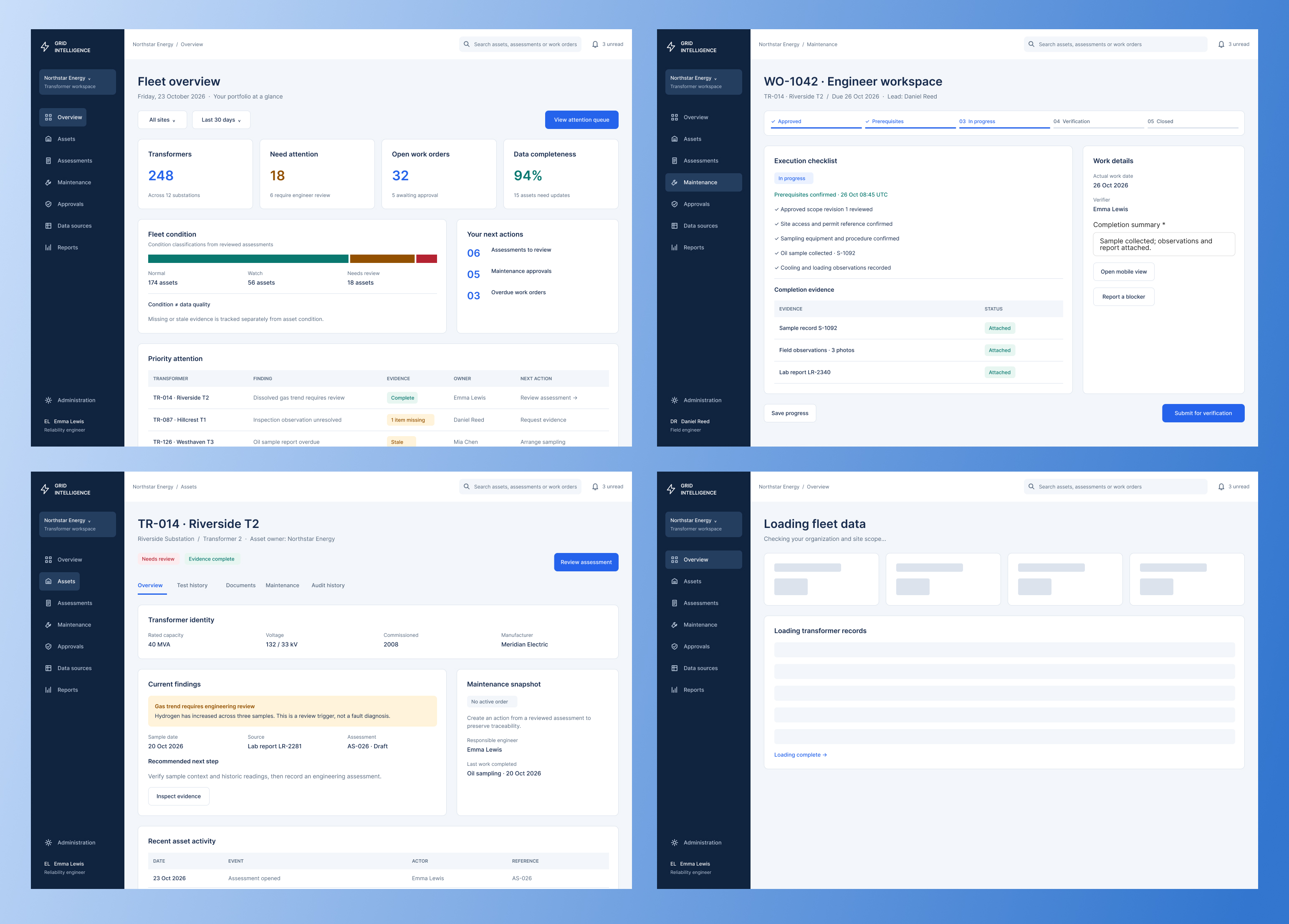
Asset condition describes the transformer, data quality describes the evidence, and work status describes the maintenance action. Combining them could make incomplete evidence look like a healthy asset.
Put the reason next to approval
Reviewers see assessment, scope, and assignment together. Change requests and rejection include a reason so the planner knows what must change.
Separate submission from closure
An engineer can submit completed work, but a verifier reviews the evidence before closing the action. Insufficient evidence creates a visible rework path.
Treat blockers as owned states
Blocked work remains visible with a reason, next action, and owner rather than disappearing from active work.
Proposed validation
Run task-based sessions with planning, approval, and field representatives. Ask them to investigate a finding, assign work, request a change, report a blocker, and review completion evidence.
- Can users identify the correct owner and next action?
- Can reviewers find the latest decision and its reason?
- Do users distinguish submission from verified closure?
Open requirements
- Which edits invalidate an approval
- Engineer reassignment and simultaneous edits
- Poor-connectivity field submission
- Audit integrity and retention rules
No usability results, deployment, utility customer adoption, or business improvements are claimed.
Next: ADU Aviation Mobile App
View case study